| |
|
Send
E-Cards
of County Louth
County Louth from Samuel
Lewis' Topographical
Directory of Ireland 1837
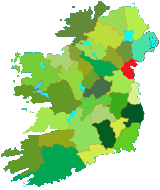
Louth is  the
smallest of Irelands counties, it is bounded on the North
by County Armagh, to the Northwest by County Monaghan, to
the South lies County Meath and to the East by the Irish Sea.
The name is said to have come from the river Lud. Its two
major towns are Dundalk and Drogheda
both of
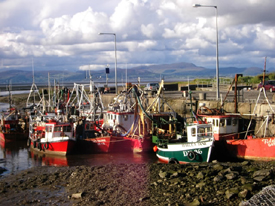
which have harbours, Dundalk harbour is used to import general
cargo including fertilizer, grain, timber and coal (Some
of the grain is used by the local brewing industry). the
smallest of Irelands counties, it is bounded on the North
by County Armagh, to the Northwest by County Monaghan, to
the South lies County Meath and to the East by the Irish Sea.
The name is said to have come from the river Lud. Its two
major towns are Dundalk and Drogheda
both of
which have harbours, Dundalk harbour is used to import general
cargo including fertilizer, grain, timber and coal (Some
of the grain is used by the local brewing industry). |
The county
is more industrialized than most areas of the Irish Republic, many
industries located around the town of Dundalk. The county's major
fishing port is Clougherhead, with small fleets based at Droheda
and Dundalk.
Much
of Louth is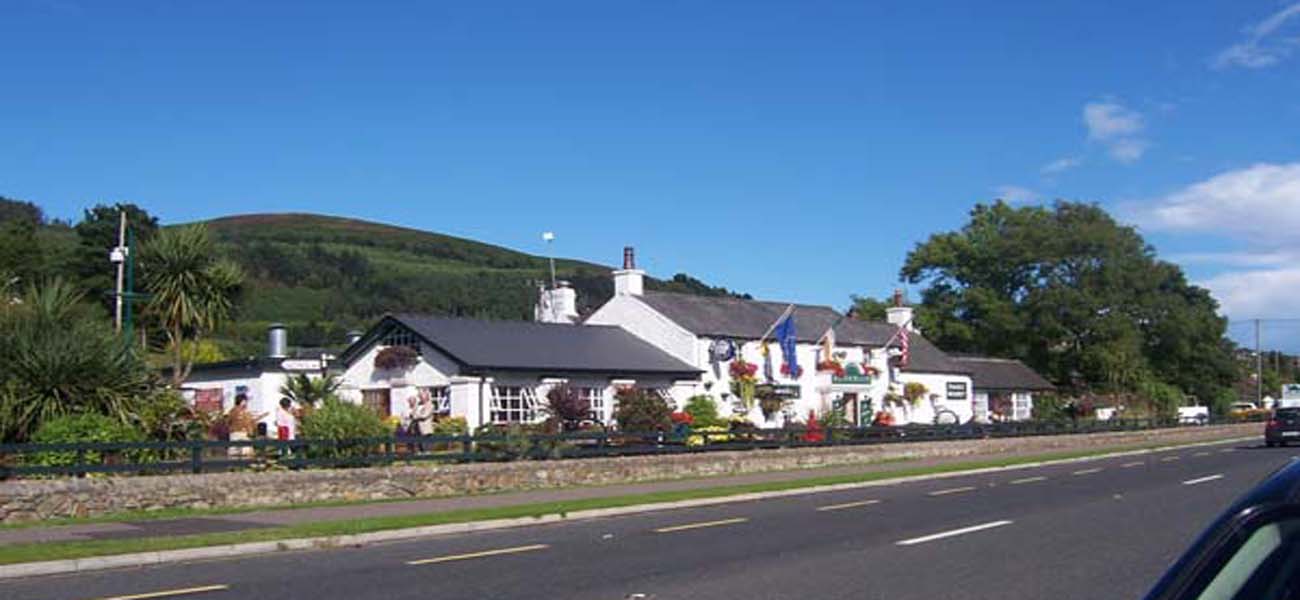 lowland, rising to hills in the southwest. The only mountainous
area is the picturesque Carlingford Peninsula in the north, these
mountains are sometimes known as the Cooley Mountains and are associated
with many of Irelands myths
and legend's the most notable being The Cattle Raid of Cooley.
lowland, rising to hills in the southwest. The only mountainous
area is the picturesque Carlingford Peninsula in the north, these
mountains are sometimes known as the Cooley Mountains and are associated
with many of Irelands myths
and legend's the most notable being The Cattle Raid of Cooley.
Carlingford Mountain rises to 590 metres
(1935 Ft) and provides views across Carlingford Lough to the Mourne
Mountains in County
Down.
The River Boyne in the south of the county
enters the Irish Sea at Drogheda, other rivers in the county are
the Fane, The Glyde and The Dee, the latter two merge just before
entering the Irish sea a few miles south of Castlebellingham. Much
of the coast is low-lying with some sandy beaches. |
Agriculture employs only about one-tenth
of the population, the farmland of Louth is varied and suited to
a wide variety of uses. More than one-fifth of it grows arable crops,
mainly barley, oats, potatoes, and wheat. Most farms are mixed,
with beef cattle production and dairying as the leading livestock
enterprises. Sheep are reared on the Cooley Mountains. About 30%
of the population work in manufacturing.
Most of the industries are in Dundalk and
Drogheda. Dundalk has brewing, clothing, engineering, footwear,
meat, and tobacco industries. In Drogheda there are varied food
processing, light engineering, and clothing industries. Service
industries account for more than half the employment. A regional
technical college in Dundalk serves the northeast of the Irish Republic.
Louth sends four Td's to Dail Eireann, the county is administered
mainly by a county council based in Dundalk.
Read about the history of County Louth and
information about the county from Samuel Lewis' Topographical
Directory of Ireland published in 1837.
Tourist
Information
Jocelyn Street
Dundalk
Co Louth
Tel +353 (0)4293 35484
Fax +353 (0)4293 38070
E Mail
Web
Site |
Seasonal only.
|
|
|